How to Visit and Pray at a Shinto Shrine
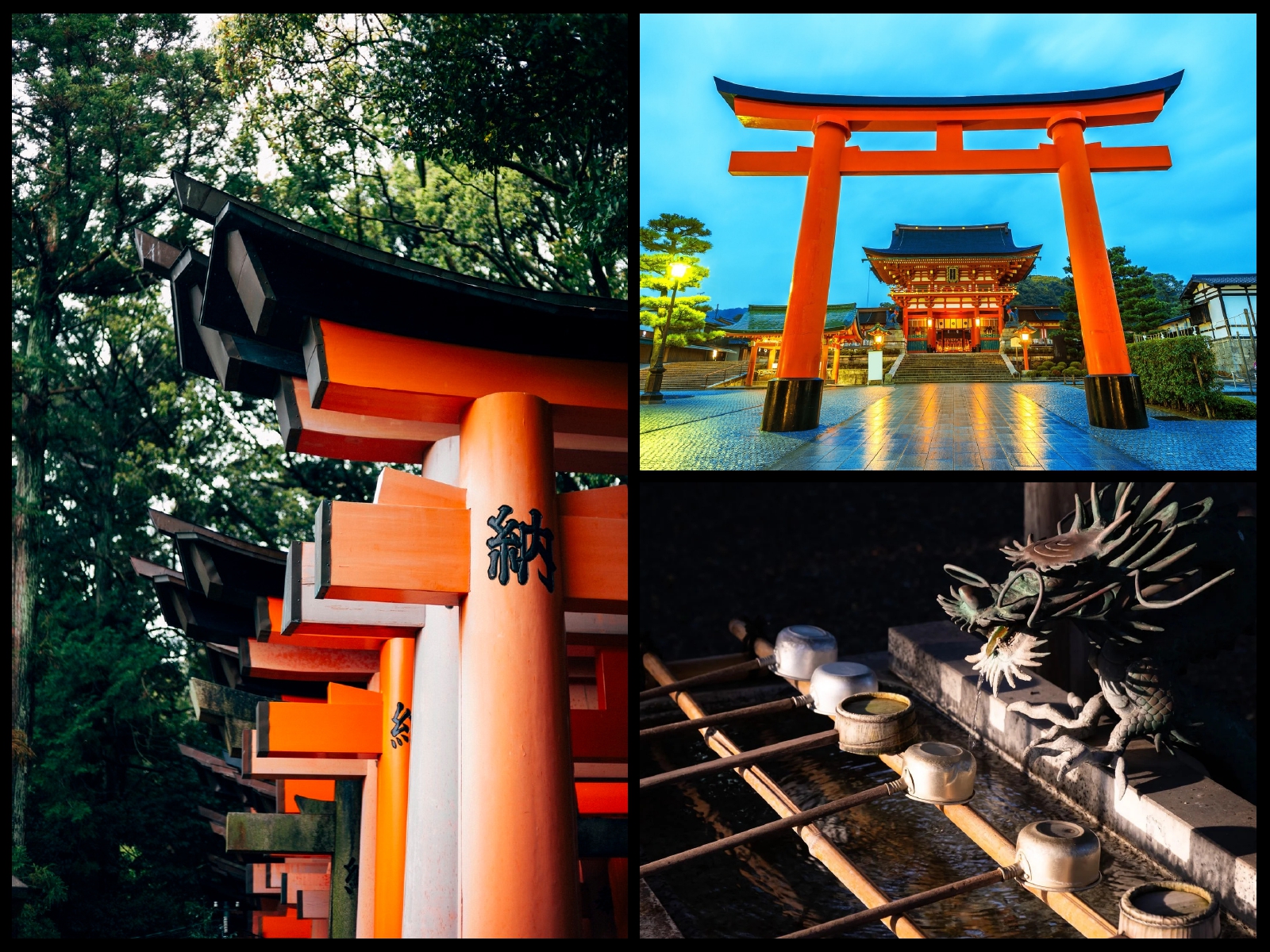
In Japan, it is said that countless gods inhabit the world. Shinto belief holds that kami, sacred spirits, reside in natural elements and everyday surroundings. A torii gate marks the boundary between the ordinary world and the realm of the kami. Beyond it, the sounds of wind through trees and gravel beneath one’s feet create an atmosphere where nature itself feels present. A shrine visit is an act of recognizing the sacred presence that already exists all around.
1. The Torii Gate: Stepping Into Sacred Ground
At the torii gate, a brief pause is customary. Before passing through, visitors stand slightly to the side, offer a bow, and step forward with awareness.
Along the approach path, the center is traditionally avoided. This central line is regarded as the path of the kami, and walking along the sides expresses respect.
2. The Washing Basin: Preparing Body and Spirit
Near the entrance stands a stone water basin with ladles, known as the chōzuya. This ritual purification prepares both body and spirit before approaching the shrine.
The general sequence is as follows:
1. The ladle is held in the right hand to wash the left hand.
2. Hands are switched, and the right hand is washed.
3. Water is poured into the left palm to gently rinse the mouth, without touching the ladle to the lips.
4. The left hand is washed once more.
5. Remaining water is allowed to run down the handle of the ladle, cleansing it for the next visitor.
Even a simple gesture of these motions is considered respectful.
3. The Main Shrine: Offering Thanks to the Kami
After purification, attention turns to the main sanctuary (haiden), where prayers are offered to the enshrined kami.
At the offering box:
• A coin is placed gently inside.
• If a bell rope is present, it is rung once to announce presence.
Prayer follows the Shinto style: two bows, two claps, and one final bow. Between the claps, gratitude is expressed or a quiet wish is made. Shinto prayers traditionally emphasize appreciation for daily life, health, and harmony rather than personal requests.
4. Leaving: A Respectful Farewell
When leaving the shrine grounds and passing back through the torii gate, a final pause is taken. Turning toward the shrine, a bow is offered in gratitude to the kami before returning fully to everyday life.
Why These Manners Matter
After purification, attention turns to the Main Hall (hondō), where the principal Buddhist image is enshrined.
Why These Manners Matter
Shrine manners are not strict rules but gentle expressions of respect:
• bowing acknowledges the presence of the kami,
• purification prepares the heart,
• clapping expresses sincerity.
A shrine visit reflects the coexistence of humans and nature, a core concept underlying Shinto belief, expressed through gratitude and awareness.